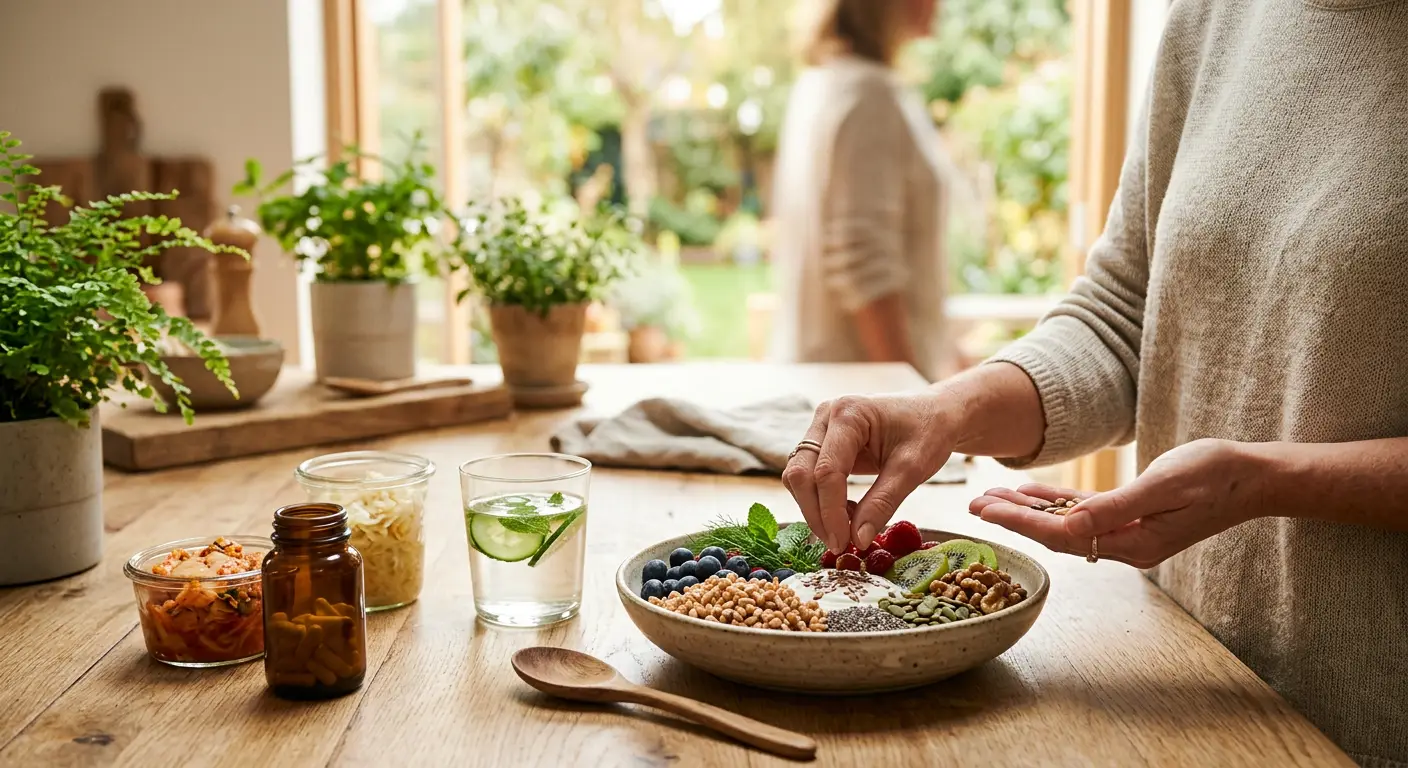
The truth is, women aren't failing; their biology is undergoing profound shifts, and the old rules for health and weight no longer apply. A key player in this midlife drama is often overlooked: your gut. But what exactly is happening to your gut health in menopause? And more importantly, what can you do about it?
The Gut Microbiome and Estrogen: Deconstructing the Link
For years, we've heard that declining estrogen in menopause directly alters the gut microbiome, leading to a cascade of negative effects. This makes intuitive sense, especially with the concept of the Estrobolome & Menopause: Why Your Gut is Key to Hormone Balance—a collection of gut bacteria that metabolize estrogens. However, recent research suggests the picture might be more nuanced than we previously assumed.
A groundbreaking 2026 systematic review and meta-analysis by Saravinovska et al. in Frontiers in Endocrinology Study set out to clarify the direct impact of low estrogen (hypoestrogenism) on gut microbiome (GM) composition. Researchers analyzed data from seven studies, comparing the gut characteristics of hypoestrogenic women (post-menopausal or with premature ovarian insufficiency, n=1267) to euestrogenic pre-menopausal controls (n=463). Their findings were, frankly, surprising.
What the Study Found: Challenging a Core Assumption
This meta-analysis meticulously evaluated key markers of gut health, including alpha-diversity (a measure of microbial richness) and the relative abundances of major bacterial phyla like Bacteroidetes and Firmicutes. Despite the widely held belief, the study found no significant differences in alpha-diversity (p=0.990), Bacteroidetes (p=0.440), or Firmicutes (p=0.110) abundance, nor in the Bacteroidetes to Firmicutes ratio (p=0.400) between hypoestrogenic and euestrogenic groups. This held true regardless of whether hypoestrogenism was due to post-menopause or premature ovarian insufficiency.
What this actually means is that, based on current consolidated evidence, the direct, broad-stroke changes in the overall diversity or major bacterial groups of the gut microbiome might not be as straightforwardly tied to estrogen decline alone as we'd surmised. The study authors themselves cautioned that these findings should be interpreted with caution due to high heterogeneity and limited control of confounding factors. But it certainly pushes us to think beyond a simple 'estrogen drops, gut changes' narrative.
My Expert Analysis: It's More Complex Than We Thought
This study doesn't say estrogen doesn't influence the gut. It suggests that if it does, the impact isn't necessarily on overall diversity or the big-picture phyla ratios in a way that's consistently detectable across different studies. This might be because the changes are more subtle, affecting specific species or functions rather than broad categories. Or, even more likely, it's not simply estrogen alone but its interaction with other factors that drive the changes we feel.
So, if it's not purely a direct estrogen-to-diversity link, why do so many women experience digestive upset, bloating, and metabolic slowdown during menopause? This leads us to the next, critical piece of the puzzle: the gut-brain axis, dietary polyphenols, and the overall cardiometabolic shifts unique to this phase of life. It’s not just about what's in your gut, but what your gut is doing and how it interacts with your body as a whole.
The Real Gut-Brain-Hormone Connection: Dietary Polyphenols
Even if direct, broad-spectrum gut microbiome changes aren't solely driven by estrogen, the interactions within the gut in a hypoestrogenic state become even more crucial. This is where dietary polyphenols enter the scene as a true biohacking powerhouse for midlife.
A 2026 perspective by García-Nicolás, Jarrín-Orozco, Romo-Vaquero, et al. in Food & Function Study masterfully connects the dots between hormonal decline, inflammation, metabolic alterations, the gut-brain axis, and the transformative power of dietary polyphenols. They highlight how the postmenopausal period remodels the gut microbiota and influences the production of microbial metabolites that are vital for immune, endocrine, and neural communication.
How Polyphenols Reshape Your Midlife Gut
Polyphenols—those vibrant compounds found in colorful plant foods—aren't just antioxidants. They depend heavily on gut microbial transformation to become bioactive and exert their benefits. These benefits include:
- Maintaining barrier integrity: Fortifying both intestinal and blood-brain barriers, crucial when you're battling issues like Leaky Gut & Chronic Inflammation in Midlife Women: Your Guide.
- Modulating inflammation: Counteracting the chronic low-grade inflammation that is a hallmark of menopause.
- Supporting neurotransmitter synthesis: Directly impacting mood, cognition, and stress responses via the gut-brain axis.
- Enhancing metabolic function: By influencing short-chain fatty acid (SCFA) production and bile acid remodeling.
The authors emphasize that these pathways are sensitive to hormonal decline. The lack of estrogen modifies microbial metabolism, host conjugation processes, and our physiological response to dietary compounds. This means the polyphenols you eat may not work the same way they did when you were younger, or they may require a more robust, diverse microbiome to be properly converted into beneficial compounds.
So, while estrogen itself might not dramatically shift the types of bacteria, its decline certainly impacts how the existing bacteria behave and process nutrients, especially polyphenols. This is a critical distinction.
The Answer Moment: What's Really Going On with Your Gut in Menopause?
The short answer: your gut microbiome's functionality and its interaction with your changing hormonal landscape are shifting, even if its overall diversity hasn't taken a nose-dive. The key takeaway from these studies is that while direct, macroscopic changes to our gut microbiome's diversity might not be consistently triggered by estrogen decline alone, menopause absolutely introduces a new set of challenges that impact gut function and health. These challenges are driven by:
- Reduced Estrogen's Indirect Effects: Estrogen decline impacts metabolic health, inflammation, and cellular aging — all of which stress the gut over time, even if not directly changing its structure.
- Increased Inflammation: Menopause is a period of increased chronic low-grade inflammation ('inflammaging'). This inflammation affects gut permeability and the function of gut-brain axis communication.
- Metabolic Alterations: Insulin resistance, altered lipid metabolism, and weight gain are common in menopause. These metabolic shifts directly influence gut microbial activity and the production of beneficial compounds.
- Altered Polyphenol Metabolism: Your gut microbes are crucial for transforming dietary polyphenols into active compounds. In menopause, this process might become less efficient, reducing the protective effects of these compounds.
This is why traditional approaches often fail women in midlife; they don't account for these nuanced biological changes. See the Complete Reset Plan in "Estrogen Left the Chat" for a comprehensive understanding of these interconnected systems and a targeted strategy.
Cardio-Metabolic Health & the Gut: A Polyphenol Powerhouse
It's not just about gut function for digestion; it's about the profound impact on cardiometabolic health, which becomes a significant concern in menopause. A 2026 narrative review by Sánchez-Martínez, González-Barrio, and Periago in Nutrients Study drives this point home. They highlight how menopause increases the risk of cardiometabolic diseases like obesity, dyslipidemia, high blood pressure, and insulin resistance.
Their review presents a compelling case for dietary polyphenols as a potent strategy to mitigate these risks. Polyphenols work through several mechanisms, including:
- Gene expression regulation: Helping to turn on beneficial metabolic pathways.
- Lipid metabolism control: Improving cholesterol profiles.
- Glucose homeostasis: Stabilizing blood sugar levels and improving insulin sensitivity.
- Blood pressure reduction: Directly contributing to cardiovascular health.
- Prebiotic effects: Nourishing beneficial gut bacteria.
- Antioxidant and anti-inflammatory activities: Directly combating systemic inflammation.
Practical Takeaways: Harnessing Polyphenols for Your Gut and Heart
Given the critical role of gut microbes in activating polyphenols, and the increased cardiometabolic risk in menopause, prioritizing polyphenol-rich foods becomes non-negotiable. This isn't just about eating 'healthy'; it's about strategic biochemistry.
- Diversify Your Plate: Aim for a wide array of colorful fruits, vegetables, legumes, nuts, and seeds. Think berries (especially dark ones like blueberries and blackberries), apples, citrus, dark leafy greens, onions, garlic, green tea, cocoa, and olive oil. Each type provides different polyphenols that feed different beneficial microbes.
- Focus on Fermented Foods: While not directly polyphenol sources, fermented foods like kimchi, sauerkraut, kefir, and yogurt introduce beneficial bacteria that can improve your ability to metabolize polyphenols.
- Consider Quality Supplements: While food first is always the mantra, if your diet is lacking, specific polyphenol extracts (e.g., resveratrol, curcumin, quercetin) can be powerful. However, their bioavailability is often low without the right microbial environment or specific formulations. This is where personalized nutrition steps in.
- Personalization is Key: As Sánchez-Martínez et al. emphasize, personalized nutrition strategies are crucial to optimize polyphenol effectiveness. Your unique gut microbiome ('metabotype') determines how you process these compounds. For example, some women are 'equol producers' from soy isoflavones, others are 'urolithin producers' from pomegranates – and these differences profoundly impact the health benefits. This is a journey of self-experimentation supported by science.
Beyond Polyphenols: The Holistic Approach to Gut Health in Menopause
While polyphenols are powerful, they are one piece of a larger puzzle. To truly optimize gut health in menopause, you must address the full spectrum of factors influenced by estrogen decline and systemic changes.
- Manage Stress: Chronic stress (and its impact on cortisol) directly affects gut permeability and the gut-brain axis. This fuels inflammation and can exacerbate symptoms like food sensitivities perimenopause. Prioritize stress reduction techniques like meditation, yoga, or spending time in nature.
- Prioritize Fiber Diversity: Beyond polyphenols, focus on a high-fiber diet from various sources (not just one type of fiber). Different fibers feed different beneficial bacteria, contributing to overall gut resilience and the production of short-chain fatty acids (SCFAs) like butyrate, which are critical for gut lining integrity and metabolic health.
- Hydration is Non-Negotiable: Water is essential for maintaining digestive rhythm and preventing constipation, a common complaint in menopause.
- Movement Matters: Regular physical activity, particularly strength training, supports metabolic health, reduces inflammation, and can positively influence gut microbial diversity.
- Adequate Protein Intake: Protein is critical for satiety, muscle maintenance, and blood sugar control – all factors that indirectly support a healthy gut by reducing inflammatory triggers. This is a primary focus in "Estrogen Left the Chat" for preventing menopausal weight gain and combating sarcopenia.
My Final Opinion: Stop Blaming Yourself, Start Biohacking Your Gut
The narrative that menopause weight gain, bloating, and fatigue are simply a matter of character is not just frustrating, it's unscientific. Your biology is changing, and so must your strategy. The latest research, while challenging some older assumptions, reinforces that your gut is a mission-critical organ in midlife.
It's not about a simple cause-and-effect with estrogen and gut diversity. It's about how the entire ecosystem of your gut biome responds to a hypoestrogenic, inflammatory, metabolically altered environment. Your gut's ability to process beneficial compounds like polyphenols, manage inflammation, and communicate with your brain is fundamentally different.
Instead of chasing fads, double down on a science-informed approach that nurtures your gut with diverse plant fibers, polyphenols, and targeted lifestyle strategies. This is the path to regaining control over your hormones, metabolism, and overall well-being. Your gut isn't just your digestive system; it's a profound lever for your entire health in menopause. Follow us on Pinterest for more actionable insights and evidence-based strategies.
FAQ
Can menopause really cause gut health issues like bloating and constipation?
Yes, absolutely. While recent research suggests that menopause doesn't necessarily cause broad, direct changes to gut microbiome diversity, the decline in estrogen does indirectly impact gut function. Estrogen plays a role in gut motility, mucus production, and barrier integrity. When estrogen drops, women often experience slower digestion, increased gut permeability, and altered inflammatory responses, which can manifest as bloating, constipation, and general digestive discomfort. It's not just a gut composition change, but a gut function change.
What are polyphenols, and why are they so important for gut health in menopause?
Polyphenols are powerful plant compounds found in fruits, vegetables, nuts, seeds, and spices. They are crucial for gut health in menopause because they act as prebiotics, feeding beneficial gut bacteria, and are transformed by these bacteria into active metabolites with anti-inflammatory, antioxidant, and hormone-modulating effects. In menopause, the body's inflammatory state and metabolic profile shift, so relying on diverse polyphenols means providing your gut with the raw materials to produce protective compounds that support cardiometabolic health and overall well-being, even with reduced estrogen.
How can I improve my gut health during menopause if estrogen alone isn't the direct factor?
Improving gut health in menopause requires a holistic approach that acknowledges the indirect impacts of estrogen decline and the increased inflammation. Focus on a diverse, whole-food diet rich in various plant fibers and polyphenols (berries, leafy greens, legumes, nuts). Incorporate fermented foods. Prioritize stress management techniques, as stress directly impacts gut function. Ensure adequate protein intake to support overall metabolic health, and engage in regular physical activity. These strategies empower your gut microbiome to function optimally, despite hormonal shifts, helping to mitigate symptoms like weight gain, bloating, and fatigue. This multi-faceted approach is detailed in "Estrogen Left the Chat."