Menopause Symptoms

    Menopause and perimenopause symptoms go far beyond hot flashes. Falling and fluctuating estrogen touches nearly every system in the body, which is why women report everything from vertigo and heart palpitations to canker sores, itchy skin, and internal vibrations, symptoms rarely connected to hormones by name. Every explainer here cites a real, dated study rather than generic wellness advice, and walks through the actual mechanism: what estrogen normally does in that system, and what happens when it declines. The goal is not to make you feel like a collection of symptoms, it is to give you the biochemistry so each one makes sense, and so you know which are ordinary and which are worth a doctor's attention.

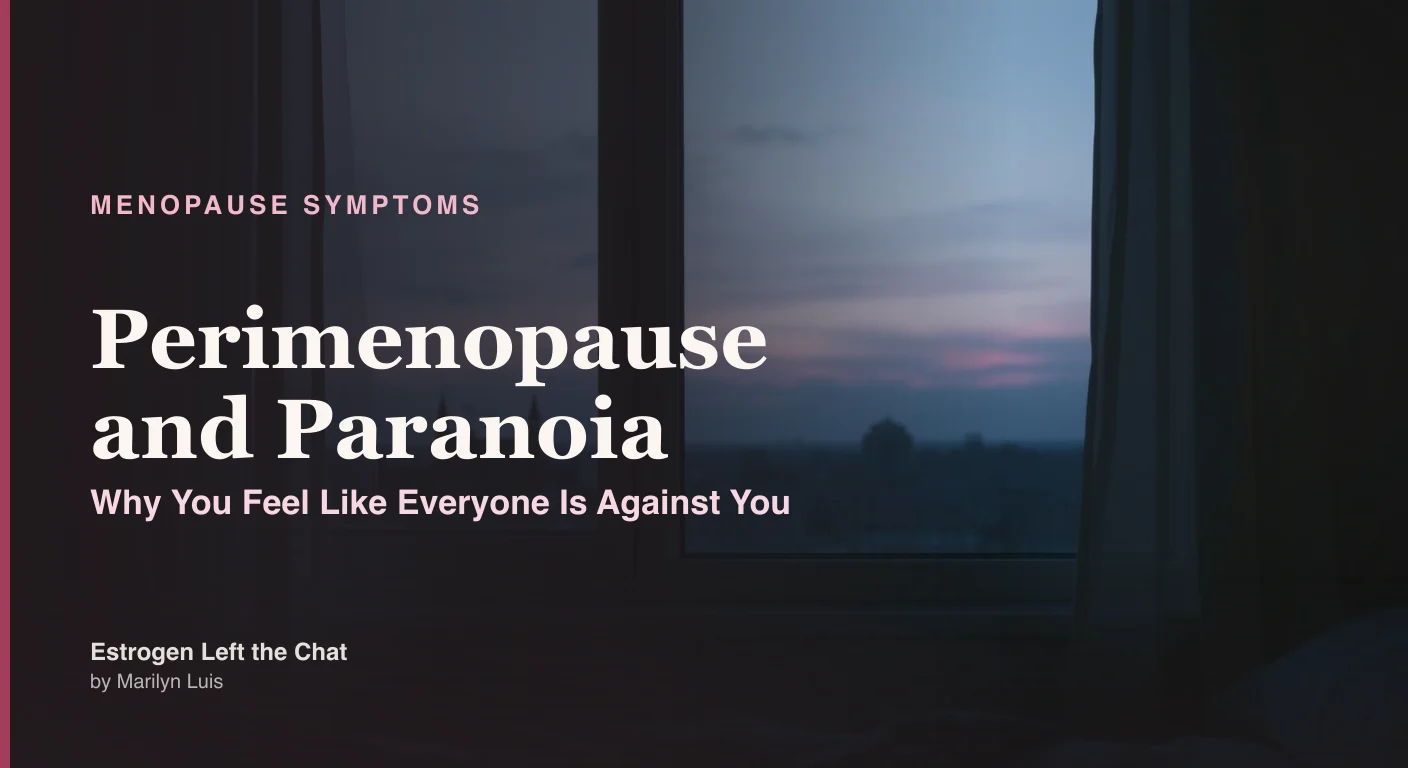
    Woman gazing pensively out a window, representing paranoid feelings during perimenopause
    Menopause Symptoms8

    Perimenopause and Paranoia: Why You Feel Like Everyone Is Against You (and What Is Actually Happening)

    Paranoia during perimenopause is real and has a biological explanation. As estrogen and progesterone decline, the brain's threat-detection circuits lose their chemical buffer, making everyday interactions feel loaded with suspicion. You are not going crazy. Your neurotransmitters are recalibrating under hormonal pressure - and that changes how your brain reads the room.

    Read More
    Woman in her 40s fanning herself in a cool room, looking flushed but composed, soft cream and berry tones, representing perimenopause heat sensitivity and hot flashes
    Menopause Symptoms7 min read

    Why Am I So Hot in Perimenopause? The Broken Thermostat Explained

    During perimenopause, estrogen's decline disrupts a specialized cluster of neurons in the hypothalamus called KNDy cells - your internal thermostat. When estrogen drops, these cells fire unchecked, collapsing the temperature range your body will tolerate before triggering a heat-dump response. That is why a one-degree rise in room temperature - or a sip of coffee - can send you from fine to boiling in seconds.

    Read More
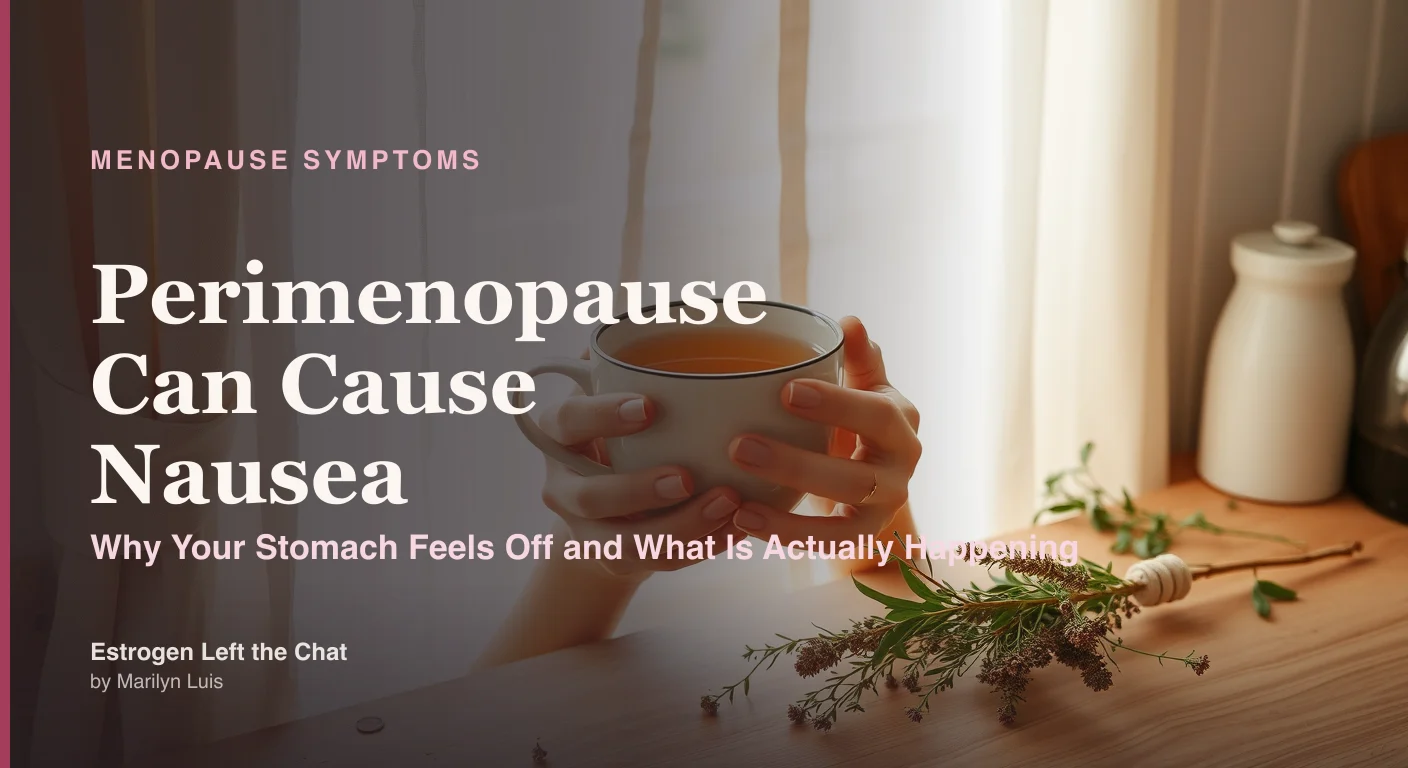
    Woman in her 40s sitting at a kitchen table with a cup of ginger tea, hand resting gently on her stomach, natural morning light, calm editorial style
    Menopause Symptoms8 min read

    Perimenopause Can Cause Nausea: Why Your Stomach Feels Off (and What Is Actually Happening)

    Yes, perimenopause can cause nausea. The queasy, unsettled feeling that many women notice in their 40s is not imagined - it is a direct consequence of falling estrogen and erratic progesterone disrupting gut motility, altering the gut microbiome, and amplifying the body's stress response. Nausea is one of the most overlooked gastrointestinal symptoms of the menopausal transition.

    Read More