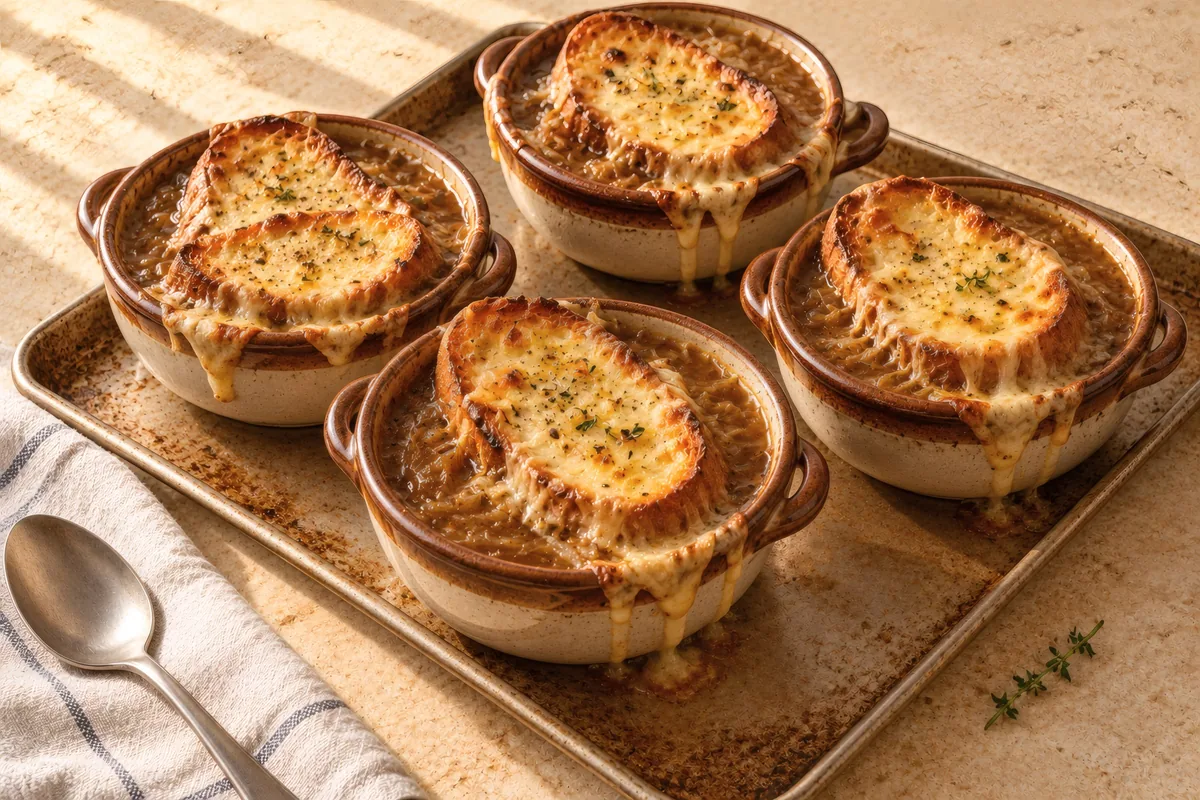
French Onion Soup
Your slow cooker does the long, patient job of caramelizing a mountain of onions to a deep brown while you get on with your day. Finish under the broiler with toast and bubbling Gruyère.
Ingredients
- 4 lb (1.8 kg) yellow onions (about 8 medium), halved and thinly sliced
- 4 tbsp butter, cut in pieces
- 1 tbsp olive oil
- 1/2 tsp salt
- 3 garlic cloves, minced
- 1/2 cup (120 ml) dry white wine
- 7 cups (1.66 L) lower-sodium beef broth
- 1 1/2 tsp Worcestershire sauce
- 1 tsp dried thyme
- 2 bay leaves
- 1/2 tsp black pepper
- 12 slices (1/2 inch thick) from a baguette, about half a baguette (125 g)
- 6 oz (170 g) Gruyère or Swiss cheese, shredded (about 1 1/2 cups)
Method
- Put the onions in the slow cooker with the butter, oil and salt and toss. It will look like far too many onions; they cook down to about a quarter. (A food processor slicing disk makes quick work of 4 pounds.)
- Cover and cook on LOW 9 to 10 hours, until the onions are very soft and light golden. Starting them the night before works well.
- Prop the lid ajar with the handle of a wooden spoon, turn the cooker to HIGH and cook 1 1/2 to 2 hours more, stirring every 30 minutes and scraping the browned edges back in, until most of the liquid has cooked off and the onions are a deep caramel brown.
- Stir in the garlic and wine, then the broth, Worcestershire, thyme, bay leaves and pepper. Cover and cook on HIGH 1 hour, until hot and well blended. Remove the bay leaves and taste for salt.
- The broiler finish is the one extra step, and it is worth it: heat the broiler, toast the baguette slices on a sheet pan 1 to 2 minutes per side, then ladle the soup into oven-safe bowls set on the pan. Top each with 2 toasts and a handful of Gruyère and broil 2 to 4 minutes, until bubbling and browned in spots. The bowls will be very hot.
Freezer: Freeze the soup without the bread and cheese, up to 3 months. The caramelized onions on their own freeze well too.
- Wake it up
- A grind of black pepper over the cheese. If the broth tastes flat before the bread goes on, stir in 1 tsp balsamic vinegar.
- Next day
- Lift the onions out of leftover soup with a slotted spoon and tuck them into a grilled cheese with Gruyère. Dip it in a mug of the warm broth.
- Half batch
- Halve everything and use a 3- to 4-quart cooker. Go by the color of the onions rather than the clock.
- Swap
- No wine: use 1/2 cup more broth and stir in 1 tsp balsamic vinegar at the end.
- Serve with
- A crisp green salad; the bread is already on top
Estimated nutrition per serving
- Calories
- 418
- Protein
- 17.5 g
- Fiber
- 5.7 g
- Sodium
- 1110 mg
- Carbs
- 41 g
- Fat
- 20.1 g
- Sat. fat
- 10.8 g
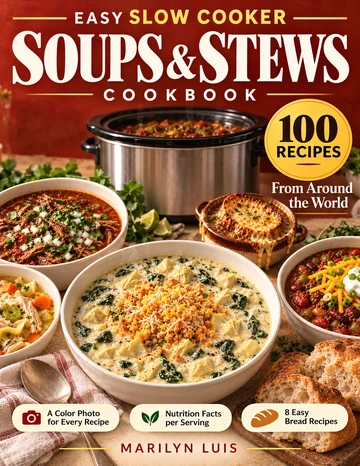
This recipe is one of 100 in Easy Slow Cooker Soups and Stews Cookbook, each with a color photo and nutrition facts per serving.
View on AmazonWhy does this soup need so many hours on LOW?
Four pounds of onions look absurd in the slow cooker before they cook, but they shrink to about a quarter of that volume. Low, slow heat is what breaks the onions down into something sweet instead of just soft: the sugars inside them need hours of gentle cooking to caramelize, and a hot stovetop skillet would scorch the outside before the inside ever turned brown. The slow cooker holds a steady, moderate heat for as long as it takes, which a stove cannot do unattended. Butter and a little olive oil carry the onions through the process without sticking, and a half teaspoon of salt at the start helps draw out their liquid so they soften rather than fry.
How long does slow cooker French onion soup really take?
The honest answer is long, and there is no shortcut setting. Onions go in on LOW for 9 to 10 hours, until they are very soft and light golden; starting them the night before works well for this stretch. Then the lid is propped ajar and the cooker switched to HIGH for 1 1/2 to 2 hours, stirring every 30 minutes, until most of the liquid has cooked off and the onions turn a deep caramel brown. Garlic, wine and broth go in last for 1 hour on HIGH to heat through. Total time runs 11 1/2 to 13 hours, and there is no way to rush the caramelizing stage without scorching the onions.
When does each ingredient go in?
The order matters more than the clock:
- Hours 1 to 10, LOW: onions, butter, olive oil and salt, covered, until very soft and light golden.
- Hours 10 to 12, HIGH with the lid propped ajar: stir every 30 minutes, scraping the browned edges back into the pot, until the onions are deep caramel brown and most of the liquid has cooked off.
- Last hour, HIGH: garlic and wine, then the broth, Worcestershire, thyme, bay leaves and pepper, covered, until hot and well blended. Remove the bay leaves and taste for salt before serving.
- At the broiler: toasted baguette slices and shredded Gruyère on top of each bowl.
A food processor slicing disk makes slicing the onions quick instead of the slowest part of the job.
How do you get the broiler finish right?
This is the one stovetop-adjacent step, and skipping it loses what makes the soup recognizable. Heat the broiler and toast baguette slices on a sheet pan for 1 to 2 minutes per side so they hold up in the hot broth instead of going soggy immediately. Ladle the soup into oven-safe bowls set on that same sheet pan, top each with two toasts and a handful of shredded Gruyère or Swiss, and broil for 2 to 4 minutes until the cheese is bubbling and browned in spots. The bowls come out very hot, so give them a minute before anyone picks one up, and keep a pot holder on the table rather than passing them hand to hand.
How do you wake it up before serving?
Taste the broth before the bread and cheese go on, since that is the last moment it is easy to adjust. A grind of black pepper over the cheese adds a little bite once it is broiled. If the broth tastes flat rather than deeply savory, a teaspoon of balsamic vinegar stirred in brings back the edge that a long caramelize sometimes flattens out. Salt is easiest to judge after the broth and Worcestershire are in, not before, since both carry their own sodium. Do this checking before the broiler step, because once the cheese is bubbling there is no good way to adjust the soup underneath it.
Can you freeze French onion soup?
Yes, but freeze it before the bread and cheese go anywhere near it. The soup itself, onions and broth together, freezes well for up to 3 months. The caramelized onions on their own also freeze well, which is useful if a batch of onions ever gets made ahead of the broth. Thaw the soup, reheat it on the stove or in the slow cooker until hot, then do the broiler step fresh: toast new baguette slices and melt new cheese on top rather than freezing bread or Gruyère, since both turn soggy or rubbery after a freeze.
What do you do with leftover French onion soup?
Lift the softened onions out of leftover soup with a slotted spoon and tuck them into a grilled cheese sandwich with a slice of Gruyère. Dip the sandwich into a mug of the warm leftover broth the way you would dip toast into the soup itself. This uses up the last cup or two of soup that is not quite enough for a full bowl, and it turns the same caramelized onions into a completely different lunch rather than a repeat of the same meal two nights running.
Smaller batch, no wine, and what to serve with it
For a smaller batch, halve every ingredient and use a 3- to 4-quart cooker instead of 6-quart; go by the color of the onions rather than the clock, since a smaller pot of onions can caramelize faster. If wine is not something you keep on hand, skip it: use an extra 1/2 cup of broth in its place and stir in 1 teaspoon of balsamic vinegar at the end for the same depth. A crisp green salad is the easiest side, since the bread is already sitting on top of the soup.
This is one of 100 recipes in the Easy Slow Cooker Soups and Stews Cookbook, including Slow Cooker Spinach Artichoke Soup, every one with a color photo, nutrition facts per serving and a freezer note.