Does the Mediterranean diet reduce perimenopause symptoms?
On current evidence, no, not in any dependable way. A 2024 cross-sectional analysis in the European Journal of Nutrition looked at 207 perimenopausal and postmenopausal Australian women, average age 50.7 years and average BMI 28.0, and scored how closely each followed a Mediterranean-style diet. Scores were low to moderate, 5.2 out of a possible 11, and adherence was not associated with the severity of menopausal symptoms (Byrne-Kirk et al., 2024).
One thing in that study did stand out, and it was not olive oil. Women who drank fewer sugar-sweetened drinks reported fewer joint and muscle complaints, independent of every other factor the researchers adjusted for. That is a single cross-sectional finding, so it shows an association rather than proof, but it is the kind of small, concrete change that is easy to test on yourself for a month.
If you have read that this way of eating fixes hot flashes, that claim is running ahead of the research. Be skeptical of any food plan sold on symptom relief alone.
What does it change in perimenopause, if not symptoms?
Body composition, and that matters more in these years than it sounds. The FLAMENCO project measured diet and body composition in perimenopausal women and found the pattern sitting in specific foods rather than in the diet's name. Intake of whole-grain cereals was associated with a smaller waist, a lower fat mass percentage and less visceral fat. Nuts were associated with lower BMI and fat mass percentage. Fruit was associated with lower BMI, a smaller waist and less visceral fat, and pulses with lower weight and BMI (Flor-Alemany et al., 2020).
Visceral fat is the fat around your organs, and perimenopause is exactly when it starts to accumulate, even when the number on the scale barely moves. It is also the fat most closely tied to blood pressure and blood sugar, which is why I keep coming back to it in perimenopause and insulin resistance.
The wider literature points the same way. A 2025 review in Post Reproductive Health surveyed Mediterranean, DASH and Portfolio eating patterns in postmenopausal women and framed the whole question around body composition, cardiometabolic health and bone, not around symptom scores (Best, 2025). That is what this diet is for.
Why does a Mediterranean plate need more protein after 45?
Because the classic Mediterranean plate was never designed around muscle, and in midlife muscle is the thing you are trying to keep. Falling estrogen is part of why strength slips, and the standard advice to fill half your plate with vegetables leaves the protein question unanswered. I wrote the full argument in protein and muscle in menopause.
The practical version: aim for 25 to 30 grams of protein in each main meal rather than saving it all for dinner. In a Mediterranean frame that means fish two or three times a week, chicken or turkey a couple of times, and pulses doing real work on the other days, with eggs, Greek yogurt or ricotta at breakfast instead of toast alone.
This is not a different diet. It is the same plate with the protein corner taken seriously, and it is the single change that makes the Mediterranean pattern fit a woman over 45 instead of a healthy twenty-five-year-old.
Where do wine and dairy fit in?
Both sit at the edges of this pattern, and neither is doing the work the research credits. The food groups that carried the body composition signal in FLAMENCO were whole grains, fruit, nuts and pulses. Wine was not among them, and a diet score that includes moderate wine is not a recommendation to start drinking.
Alcohol deserves a separate thought in perimenopause anyway, because it lands on the two things women in these years complain about most, sleep and flushing. If you are already tracking symptoms, a two-week pause is the cleanest personal experiment there is, and it costs nothing. Why midlife sleep is so easily broken in the first place is covered in why you wake at 3 am.
Dairy is simpler. Fermented dairy belongs in the traditional pattern, and Greek yogurt, kefir and ricotta are three of the easiest ways to put protein into a breakfast that would otherwise be bread.
What does a realistic perimenopause week look like?
Not a photo shoot. A week that works looks like three or four cooked dinners, not seven, with two of them deliberately making a second portion for the next day.
A workable rhythm: beans or lentils twice, fish twice, poultry twice, one night of leftovers eaten without apology. Vegetables go in by volume rather than by rule, olive oil is the default fat, and the grain is whole most of the time because that is where the body composition signal sat in FLAMENCO.
Breakfast is where most perimenopausal weeks fall apart, because it is carbohydrate on carbohydrate. Eggs, yogurt, ricotta or last night's beans all fix it. If bloating is your limiting factor rather than appetite, read menopause bloating first, because the fiber jump in this way of eating is real and worth staging over two or three weeks rather than overnight. Fiber for hormonal balance covers why it is worth doing anyway.
Which change is worth making first?
The drinks. In the Australian analysis, low consumption of sugar-sweetened beverages was the one dietary factor tied to fewer joint and muscle complaints, and it is also the easiest thing in this entire article to act on this week.
After that, in order of effort: olive oil as the default cooking fat, pulses three times a week, a whole grain in place of a refined one at the meal you eat most often, and nuts as the standard afternoon snack. None of these require a shopping trip to a specialty store, and none of them ask you to cook differently on a Tuesday night.
If you want to see whether any of it moves your own symptoms, track them. The free symptom tracker exists for exactly this, and four weeks of honest notes beats any general claim about what a diet does for women in midlife. If you are not sure which pattern of symptoms you are dealing with in the first place, the 60-second quiz will put you in the right lane.
How long before anything changes?
Honestly, nobody can give you a date. The perimenopause evidence above is cross-sectional, which means it compares women who eat differently rather than following one woman as she changes how she eats. That design can show a pattern but it cannot promise you a timeline.
What I tell women is to give it eight to twelve weeks and to measure the right thing. The scale is the least informative number in midlife, because muscle and fat move in opposite directions and cancel out. A tape measure around the waist, taken once a month in the morning, tracks the fat the research actually cared about. Energy after lunch and how your joints feel on waking are worth writing down too, since those were the complaints tied to sugary drinks.
If nothing has shifted by three months, the food is not your limiting factor, and it is time to look at sleep, training load or thyroid rather than at the olive oil.
How do you cook this way for one or two people?
This is the part the Mediterranean literature never addresses. Recipes come sized for four to six, you cook once, and then the fridge fills up with food nobody eats. Cooking for one or two is a sizing problem, not a motivation problem, and a small slow cooker solves most of it: the base goes in, the protein goes in late, and two portions come out, one for tonight and one for tomorrow.
Here are two from my cookbook that fit a perimenopause week. The first is a meat-free main that still lands at 26 grams of protein a serving, which is the number most vegetarian Mediterranean dinners miss. The second is a fish chowder for the nights when you want something warm and are not willing to stand at the stove.
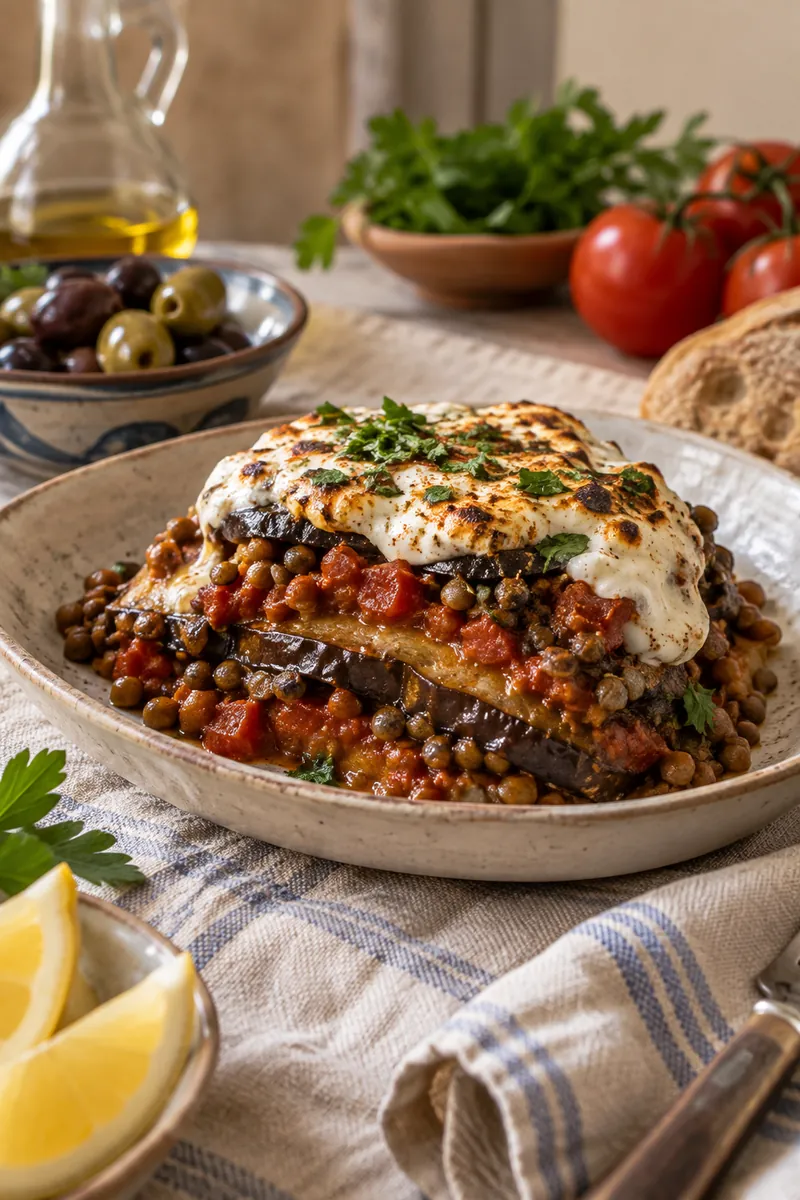
Eggplant, Tomato, and Lentil Moussaka Bowl
This spoonable dish borrows the eggplant, tomato and cinnamon flavors of moussaka. A yogurt topping replaces a baked white sauce.
Ingredients
- 300 g (10.6 oz) eggplant, cut into 1/2-inch cubes
- 120 g (4.2 oz) brown lentils, dry, picked over and rinsed
- 250 g (8.8 oz) no-salt-added canned tomatoes with juice, chopped
- 80 g (2.8 oz) onion, finely chopped
- 6 g (0.2 oz) garlic, minced
- 1 tbsp olive oil
- 1/4 tsp ground cinnamon
- 1 tsp dried oregano
- 160 g (5.6 oz) plain nonfat Greek yogurt
- 1/8 tsp table salt
- 400 ml water
Method
- Put eggplant, rinsed lentils, onion, garlic, oil, cinnamon, oregano and water into the cooker. Stir, cover and cook on LOW.
- Begin checking at 5 hours. Continue until the lentils are tender and the eggplant has softened completely. Stir in the tomatoes and their juice, then cover for about 30 minutes longer, until hot.
- Stir in the salt. Divide the lentil mixture equally and top each bowl with 80 g yogurt just before serving.
Storage: Refrigerate promptly in shallow covered containers; use within 3 days. Reheat to 165°F / 74°C.
Allergens: milk. Check packaged ingredients for additional allergens.
Estimated nutrition per serving
- Calories
- 398
- Protein
- 26.1 g
- Fiber
- 14.4 g
- Sodium
- 204 mg
- Carbs
- 59.4 g
- Fat
- 8.4 g
- Sat. fat
- 1.2 g
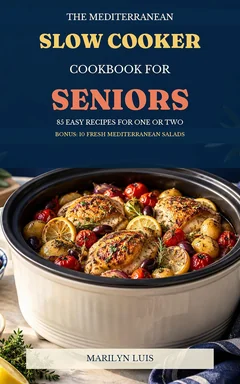
This recipe is one of 85 in The Mediterranean Slow Cooker Cookbook for Seniors, all sized for one or two.
View on Amazon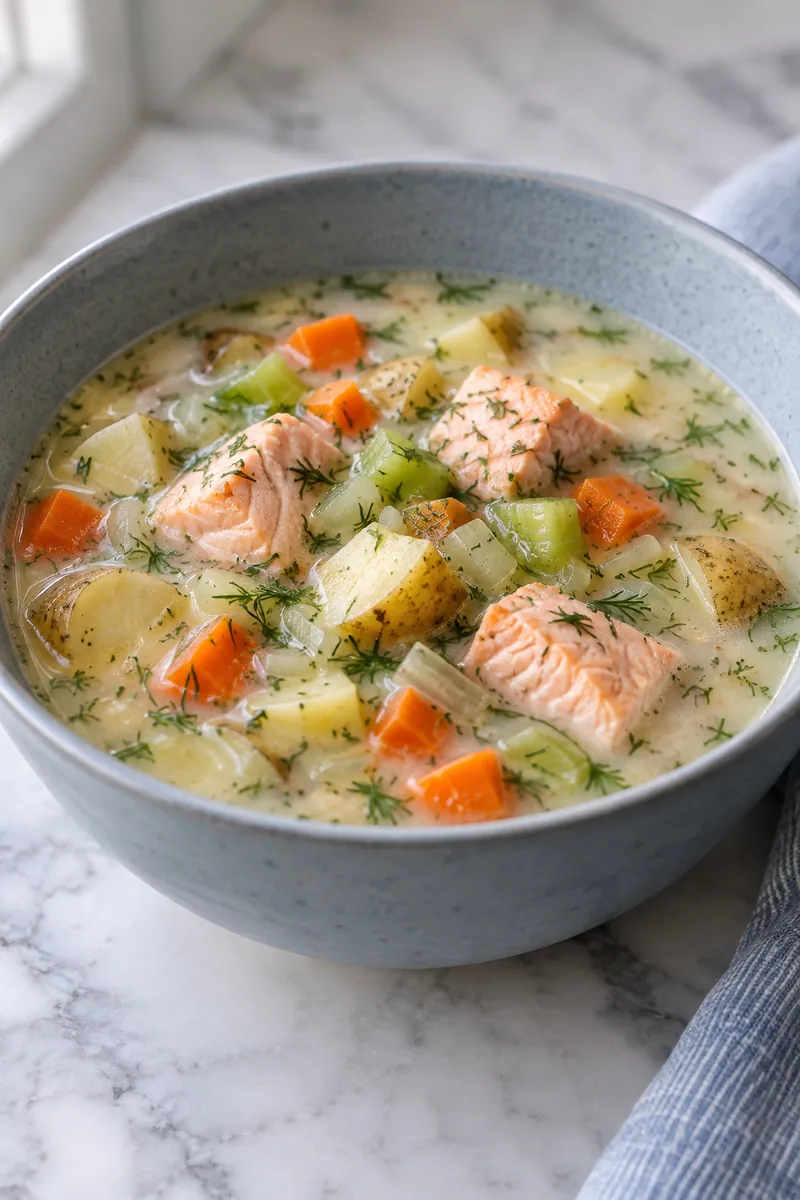
Salmon, Potato, and Dill Chowder
Milk is warmed separately and added after the salmon has cooked. The chowder stays light, with pieces of potato and fish.
Ingredients
- 300 g (10.6 oz) boneless farmed Atlantic salmon, skin removed, fully thawed, cut into 1-inch pieces
- 250 g (8.8 oz) potato, skin on, cut into 1/2-inch pieces
- 80 g (2.8 oz) carrot, cut into 1/4-inch pieces
- 60 g (2.1 oz) celery, finely chopped
- 70 g (2.5 oz) onion, finely chopped
- 180 g (6.3 oz) 1% milk
- 1 tsp olive oil
- 8 g (0.3 oz) fresh dill, chopped
- 450 ml water (about 2 U.S. cups)
- 1/8 tsp table salt
Method
- Combine potato, carrot, celery, onion, oil and water. Cover and cook on LOW until potatoes and carrots are tender, checking from 4 hours.
- Switch to HIGH and let the base become steaming hot. Add the salmon, cover and check after 20 minutes. Continue until fish reaches 145°F / 63°C.
- Stir in the measured salt. Warm the milk in a small saucepan until steaming. Gently stir it and the dill into the chowder without breaking up all the fish. Divide every component evenly.
Storage: Refrigerate promptly in shallow covered containers; use within 2 days for this recipe. Reheat gently to 165°F / 74°C.
Allergens: milk, fish. Check packaged ingredients for additional allergens.
Estimated nutrition per serving
- Calories
- 502
- Protein
- 37.3 g
- Fiber
- 4.9 g
- Sodium
- 345 mg
- Carbs
- 34.6 g
- Fat
- 23.6 g
- Sat. fat
- 5.5 g
This recipe is one of 85 in The Mediterranean Slow Cooker Cookbook for Seniors, all sized for one or two.
View on AmazonBoth come from The Mediterranean Slow Cooker Cookbook for Seniors, which is 85 recipes sized for one or two with the nutrition on every one. The Kindle edition is free on Amazon from October 3 to 5, 2026, so if you want the whole four-week plan rather than two recipes, those are the days to pick it up.
More of the same thinking lives in high protein slow cooker meals and in the Mediterranean diet after 60, which deals with chewing, appetite and salt.
My Perspective
I like this diet, and I am not going to oversell it to you. It will probably not stop your hot flashes. What it does is quietly change the things you cannot feel: where fat sits, what your blood sugar does after lunch, how much fiber reaches your gut bacteria. Those are the measures that look dull on a page and matter enormously ten years later.
What frustrates me is how it gets sold. Hormone-balancing meal plans, olive oil as a cure, a fifty-dollar supplement standing in for a bowl of lentils. The actual Mediterranean pattern is cheap, boring to photograph and genuinely good for a midlife body, and the one adjustment it needs for us is more protein at each meal. That is the whole secret, and nobody can charge much for it.
If your symptoms are what is making your life hard right now, treat food as the floor rather than the fix, and read perimenopause hormonal shifts for what is actually driving them. The deeper story of why midlife changes the rules is in my book, Estrogen Left the Chat: Biohacking Menopause.
A note from Marilyn: I am a nutrition specialist, not a physician. This article is education, not diagnosis or treatment. Perimenopausal symptoms overlap with thyroid disease, anemia and several other conditions, so take persistent or severe symptoms to your doctor rather than to a meal plan.