How much protein should you eat per meal after 50?
Most research on protein and aging points to a per-meal target of 25 to 30 grams for adults over 50, not just a daily total. A 2020 review in Nutrients looked specifically at whether spreading protein evenly across meals, rather than loading most of it at dinner, changes muscle-related outcomes, and found the per-meal amount matters because muscle responds to protein above a certain threshold at each sitting rather than to the day's running total (Nutrients, 2020). Below roughly 25 grams, a meal does less for muscle maintenance than its protein content alone might suggest; above about 30 grams in one sitting, the extra is mostly used for fuel rather than muscle repair. A slow cooker makes hitting that range easier than it sounds, because a pot of chili or stew can be built around a protein source sized to land in that window before any sides are added, rather than estimated at the end of the day.
Why does protein need go up after menopause?
Protein needs rise after menopause because muscle becomes less responsive to the same amount of protein that maintained it in your 30s and 40s, a shift researchers call anabolic resistance. A 2025 review in Nutrients on protein and aging describes this resistance as the reason older adults often need more protein per meal, not just more exercise, to hold onto muscle mass and strength (Nutrients, 2025). Falling estrogen compounds the problem, since estrogen has its own supporting role in muscle maintenance, so the loss can show up faster in the years around menopause than general aging alone would predict. Our guide to protein intake for women over 40 covers the daily totals in more depth; this article is about getting a meaningful share of that total into one slow cooker meal, since muscle responds to each sitting, not only to the day's sum.
Does animal or plant protein work better in a slow cooker meal?
Animal protein has an edge in the research, but plant protein from a slow cooker still counts. A Framingham Offspring Study analysis followed adults 50 and older for an average of 14 years and found higher animal protein intake was linked to a lower risk of losing grip strength and functional ability, while plant protein intake alone did not show the same association (Clinical Nutrition, 2021). That does not mean lentils or beans are wasted in a slow cooker. The two recipes below show a practical middle ground: a lean turkey chili for the higher animal-protein end of the range, and a lentil-mushroom sauce for a plant-forward night that still lands close to the 25 gram threshold. My slow cooker lentil soup for one and the recipes in my Mediterranean diet for seniors guide lean more plant-forward across a week, which is the pattern worth building toward rather than any single meal.
How many grams of protein are in these two slow cooker recipes?
Two recipes from my cookbook show what 25 to 30 grams of protein actually looks like in a bowl. Turkey and White Bean Chili with Oregano delivers 40.4 grams of protein per serving, well above the per-meal target, from a combination of lean ground turkey and white beans, with only 273 milligrams of sodium because the recipe measures salt by the pinch rather than relying on canned broth or bouillon.
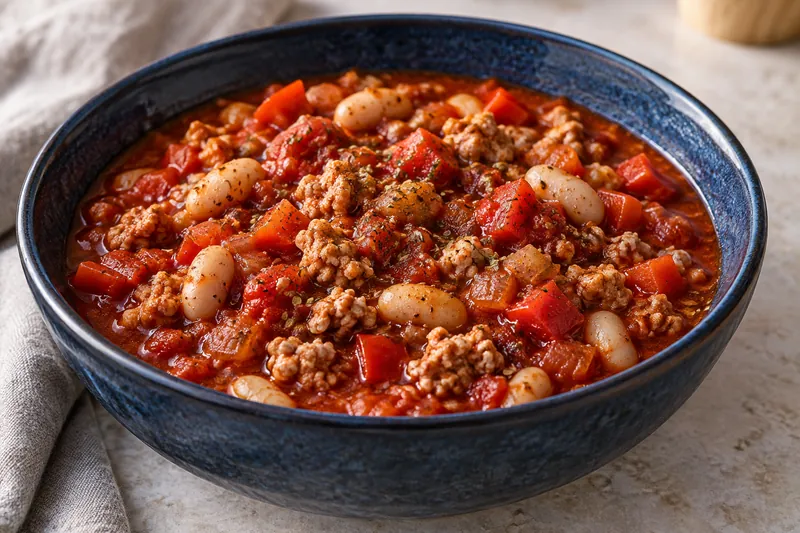
Turkey and White Bean Chili with Oregano
This mild chili uses paprika and oregano. Break up the turkey in a skillet before adding it to the beans.
Ingredients
- 280 g (9.9 oz) raw ground turkey, 93% lean, fully thawed
- 240 g (8.5 oz) cooked white beans without salt, drained
- 300 g (10.6 oz) no-salt-added canned tomatoes with juice, chopped
- 100 g (3.5 oz) red bell pepper, seeded and diced
- 70 g (2.5 oz) onion, finely chopped
- 6 g (0.2 oz) garlic, minced
- 2 tsp olive oil
- 3/4 tsp paprika
- 1 tsp dried oregano
- 1/2 tsp ground cumin
- 150 ml water (about 3/4 U.S. cups)
- 1/8 tsp table salt
Method
- Heat the oil in a skillet. Add the turkey and onion, breaking up the meat, and cook until the turkey reaches 165°F / 74°C.
- Immediately scrape the turkey, onion and all pan juices into the cooker. Add the remaining ingredients and water; stir and cover.
- Stir in the measured salt. Cook on LOW until the pepper and onion are soft, checking from 4 hours. Stir well and divide in half.
Storage: Refrigerate promptly in shallow covered containers; use within 3 days. Reheat to 165°F / 74°C.
Estimated nutrition per serving
- Calories
- 478
- Protein
- 40.4 g
- Fiber
- 12.7 g
- Sodium
- 273 mg
- Carbs
- 43.6 g
- Fat
- 17.4 g
- Sat. fat
- 3.9 g
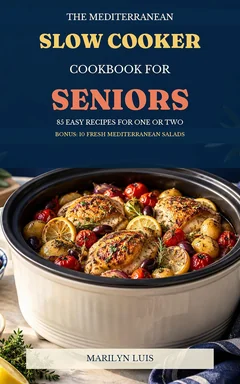
This recipe is one of 85 in The Mediterranean Slow Cooker Cookbook for Seniors, all sized for one or two.
View on AmazonLentil-Mushroom Bolognese comes in lighter, at 24.8 grams of protein per serving, just under the 25 gram mark, built from lentils and mushrooms instead of meat, with 218 milligrams of sodium. It is the plant-forward option for a night when a smaller portion of animal protein fits the week better, and the pasta is cooked separately so the sauce itself stays the measured, low-sodium part of the dish. Both recipes are sized for a 2-quart slow cooker and make two servings, so the second portion goes straight into the fridge rather than sitting out.
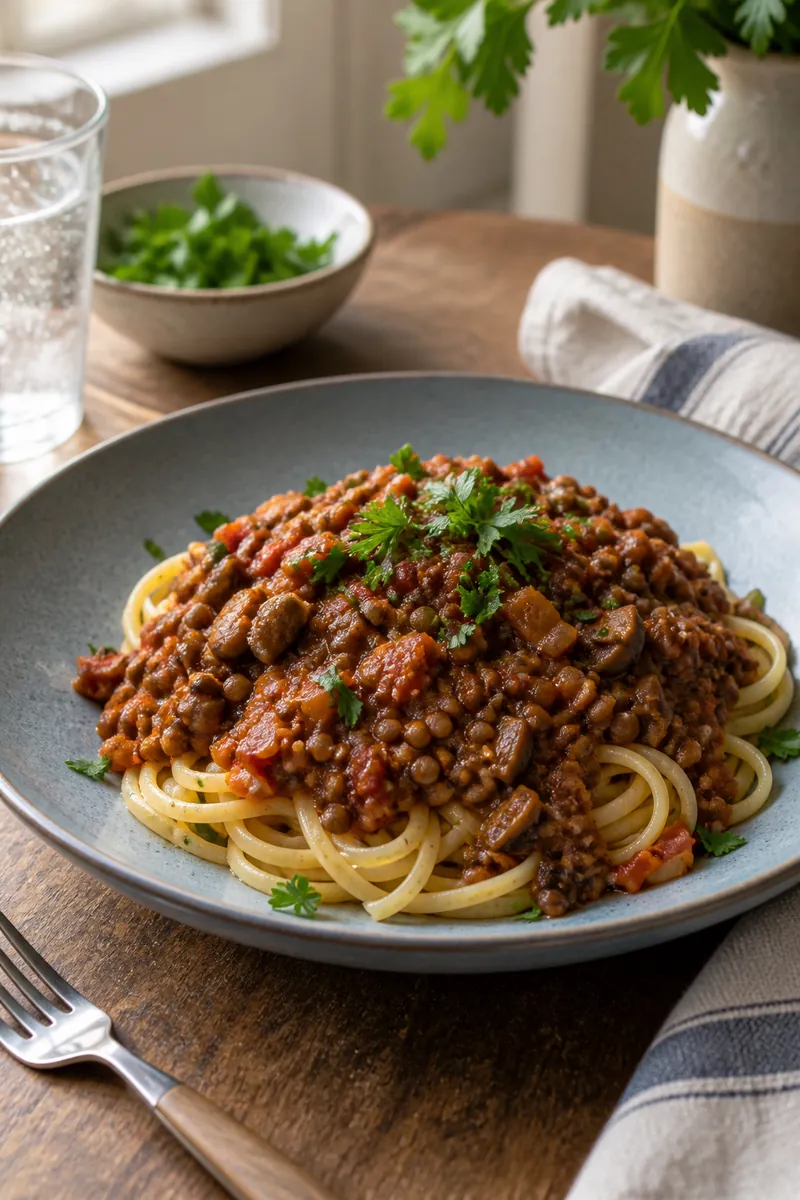
Lentil-Mushroom Bolognese
Finely chopped mushrooms give this lentil sauce a little texture. The pasta is included in the recipe and its nutrition panel.
Ingredients
- 100 g (3.5 oz) brown lentils, dry, picked over and rinsed
- 200 g (7.1 oz) white mushrooms, sliced
- 80 g (2.8 oz) carrot, cut into 1/4-inch pieces
- 80 g (2.8 oz) onion, finely chopped
- 6 g (0.2 oz) garlic, minced
- 300 g (10.6 oz) no-salt-added canned tomatoes with juice, chopped
- 25 g (0.9 oz) no-salt-added tomato paste
- 2 tsp olive oil
- 1 tsp dried oregano
- 100 g (3.5 oz) small dry pasta
- 8 g (0.3 oz) fresh basil, chopped
- 1/8 tsp table salt
- 450 ml water
Method
- Heat the oil in a skillet. Cook the onion and finely chopped mushrooms for about 8 minutes, stirring, then scrape them and all pan juices into the slow cooker.
- Add the rinsed lentils, carrot, garlic, oregano and measured water. Cover and cook on LOW until the lentils and carrot are tender, checking from 5 hours.
- Stir in tomatoes and tomato paste. Cook covered for another 30 minutes. Meanwhile, cook the pasta in a separate pan of unsalted water according to its package, then drain.
- Stir salt and basil into the sauce. Divide pasta between two bowls and spoon half the sauce over each.
Storage: Refrigerate promptly in shallow covered containers; use within 3 days. Reheat to 165°F / 74°C. Keep pasta and sauce in separate containers if saving a portion.
Allergens: wheat. Check packaged ingredients for additional allergens.
Estimated nutrition per serving
- Calories
- 497
- Protein
- 24.8 g
- Fiber
- 13.5 g
- Sodium
- 218 mg
- Carbs
- 88.8 g
- Fat
- 6.8 g
- Sat. fat
- 1 g
This recipe is one of 85 in The Mediterranean Slow Cooker Cookbook for Seniors, all sized for one or two.
View on AmazonCan you get a high protein slow cooker meal without raising sodium?
Yes, and the two recipes above are the proof: 273 milligrams and 218 milligrams of sodium per serving, both well under the roughly 400 milligrams a typical canned-soup-based slow cooker chili can carry before any salt is added at the table. The trick in both recipes is the one used throughout my cookbook: measure salt by the fraction of a teaspoon instead of relying on canned beans, canned tomatoes with added salt, or bouillon cubes for flavor, then build taste from aromatics, herbs and acid like lemon juice instead. That matters more after menopause, when blood pressure tends to climb as estrogen's protective effect on blood vessels fades, a shift covered in why your blood pressure is rising in perimenopause. My guide to low sodium slow cooker recipes for seniors has the fuller milligram breakdown across the whole book, not just these two main dishes.
What slow cooker size works best for high protein meals for one or two?
A 2-quart (1.9 liter) slow cooker is the size both recipes here are built around, and it is the size I recommend for anyone cooking high protein meals for one or two people rather than a family of four or more. A full-size 6 or 7 quart cooker spreads the same amount of meat, beans or lentils thin across a much larger surface, so the protein-rich parts of the dish can dry out or overcook at the edges before the center catches up. If a mini cooker is not yet in your kitchen, fill a larger one no more than a third full and start checking doneness earlier than the recipe states. My guide to slow cooker recipes for one or two people covers sizing for every dish in the book, and my meal plan for one person shows how a high protein dinner like this one fits into a full week's groceries.
Does eating more protein protect bone and muscle after 50?
Protein protects muscle more directly than it protects bone, but the two are connected because stronger muscles reduce falls, and falls are what turn low bone density into a fracture. The research on protein's muscle benefit after 50 is consistent enough that it shows up across reviews of frailty and aging, not just single studies, which is why the 25 to 30 gram per-meal target in this article is an evidence-based floor worth building meals around rather than a passing trend. Our guide to creatine for menopause covers the other piece of this puzzle, since creatine and protein work on overlapping but distinct pathways for muscle and bone. Neither one replaces resistance exercise, which remains the strongest single lever for both bone density and muscle strength after 50, but a slow cooker dinner that reliably hits 25 to 30 grams of protein removes one excuse for skipping it most days.
My Perspective
I did not expect a chili recipe to be the thing that finally made me believe the protein-per-meal advice, but here we are. I used to treat protein as a daily tally, something to top up with a shake if dinner came up short, and that mindset let a lot of low-protein dinners slide because I told myself I would catch up tomorrow. Building two slow cooker meals around a 25 to 30 gram target changed that, because now I can see at a glance whether a bowl of chili or stew is doing the job or just filling me up. The turkey chili is the one I make when I know I will not be hungry again for hours; the lentil bolognese is the one I reach for on a lighter, plant-forward night. Both are in my book, The Mediterranean Slow Cooker Cookbook for Seniors, alongside the sizing and sodium tricks from slow cooker recipes for one or two people. The bigger story of how menopause changes what your body does with that protein is in Estrogen Left the Chat: Biohacking Menopause.
Not sure which of your symptoms are hormonal? The free Receipts symptom decoder helps you track your own pattern, or start with the 60-second quiz.
A note from Marilyn: This article is educational and does not replace medical advice. If you have kidney disease, take blood thinners, or manage a condition where added protein needs individual guidance, talk with your doctor or a registered dietitian before changing how much protein you eat at a meal. I am a nutrition specialist, not a physician.
Frequently asked questions
How much protein should a woman over 50 eat per meal?
A woman over 50 should aim for about 25 to 30 grams of protein per meal, since research on protein distribution shows muscle responds more to protein eaten in that range at one sitting than to the same amount spread too thin across more, smaller meals. A typical slow cooker dinner built around 150 to 200 grams of lean meat, poultry, or a mix of beans and lentils usually lands in that window.
What is a good high protein slow cooker meal for weight management?
A high protein slow cooker chili or stew built around 25 to 30 grams of protein per serving works well for weight management, because protein increases fullness more than fat or refined carbohydrate per calorie. A turkey and white bean chili with about 40 grams of protein per serving, built with measured salt instead of canned broth, is a practical example that keeps calories moderate while protein stays high.
Can you make high protein meals in a small slow cooker?
Yes, a small 1.5 to 2 quart slow cooker is actually the better choice for high protein meals sized for one or two people, since a full-size 6 or 7 quart cooker spreads the same amount of meat or beans too thin and risks drying out the edges. Fill a larger cooker no more than a third full if a mini one is not available, and check for doneness earlier than the recipe states.
Is chicken, turkey, or beans better for a high protein slow cooker meal?
Lean poultry like turkey delivers more protein per gram of food than beans or lentils do, and research following adults over 50 for more than a decade found higher animal protein intake linked to better-preserved grip strength and function. That does not rule out beans or lentils, which still contribute meaningful plant protein and fiber. The most practical approach is alternating: a turkey or chicken-based chili on some nights, a lentil or bean-based stew on others.