What makes the Mediterranean diet different for women after 60?
The Mediterranean pattern is a set of eating frequencies, not a single ingredient. Vegetables and legumes appear at most meals; whole grains, olive oil, and fish several times a week; poultry and dairy in moderate amounts; red meat rarely. A 2020 narrative review that assessed 22 qualifying studies found the pattern protective against depression, frailty, and cardiovascular risk factors in older adults (Romanidou et al., 2020). What shifts after menopause is which parts of that pattern carry the most weight. Protein becomes more urgent because estrogen was partly protecting muscle tissue, and that protection disappears. Fiber is more likely to fall short as appetite shrinks with age. Sodium is more likely to affect blood pressure once estrogen-supported renal sodium handling is gone. The Mediterranean pattern, with its emphasis on legumes, fish, vegetables, and olive oil, addresses all three gaps. For the cardiovascular piece, the diet pattern that actually protects your heart in menopause covers the underlying evidence.
Which slow cooker size works for Mediterranean recipes for one or two people?
A 1.5-quart (1.4 L) bowl is the right size for a two-serving chicken or fish dish. It fills to the manufacturer's recommended range - between halfway and two-thirds full - without leaving so much empty space that the food dries at the edges during a four-hour cook. A 2-quart (1.9 L) bowl suits bulkier dishes: a chickpea stew with sweet potato and carrot needs that extra room to hold all the liquid. A 6-quart pot does not scale down reliably to two servings because too much empty space changes the cooking dynamics, and a thin layer of food at the base can cook unevenly. When selecting a slow cooker for small-household Mediterranean cooking, also think about handling: a 1.5-quart insert is light enough to carry to the sink full of liquid, while a 6-quart filled with stew is not. The Mediterranean Slow Cooker Cookbook for Seniors covers 85 recipes sized around 1.5 and 2-quart bowls, along with a chapter on fill levels, timing, and safe leftover storage.
Does the Mediterranean diet actually reduce muscle loss after menopause?
Yes, and the effect is specific to this pattern. A 2025 systematic review and meta-analysis in Nutrients pooled 11 studies in adults over 50 and found that healthy dietary patterns overall reduced sarcopenia risk by 24% (OR 0.76, 95% CI: 0.63-0.92). Among all the dietary patterns tested, the Mediterranean pattern produced the strongest individual result at OR 0.62, meaning women following it closely had roughly 40% lower odds of sarcopenia compared to those who did not (Ruiz-Valenzuela et al., 2025). The mechanism combines adequate protein, anti-inflammatory fats from olive oil and fish, and fiber from legumes, each suppressing the chronic low-grade inflammation that accelerates muscle protein breakdown after menopause. Current guidelines for healthy older adults recommend 1.0 to 1.2 g of protein per kilogram of body weight per day, rising above 1.2 g/kg when frailty is present (Heo & Yang, 2025). For the full perimenopause picture, protein intake for women over 40 covers the mechanism.
Tomato-braised chicken with olives cooks in a 1.5-quart bowl for two, delivering 38 g of protein per serving and keeping sodium to 499 mg using no-salt-added canned tomatoes as the sauce base with no broth required.
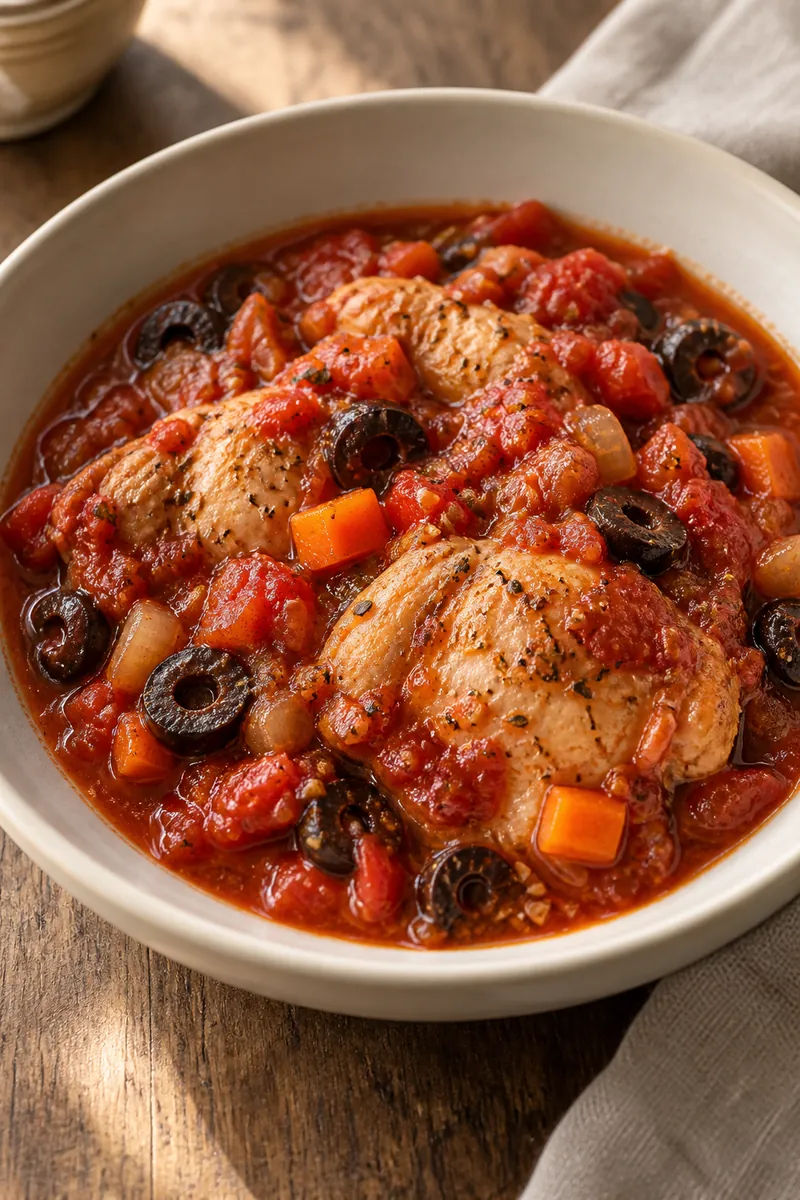
Tomato-Braised Chicken with Olives
A measured amount of olives seasons the tomato sauce. Slice them so each portion gets several pieces.
Ingredients
- 360 g (12.7 oz) boneless, skinless chicken thighs, fully thawed, visible fat trimmed
- 300 g (10.6 oz) no-salt-added canned tomatoes with juice, chopped
- 100 g (3.5 oz) onion, finely chopped
- 100 g (3.5 oz) carrot, cut into 1/4-inch pieces
- 35 g (1.2 oz) ripe canned olives, drained and sliced
- 6 g (0.2 oz) garlic, minced
- 2 tsp olive oil
- 1 tsp dried oregano
- 100 ml water (about 1/2 U.S. cups)
- 1/8 tsp table salt
Method
- Put the carrot and onion into the bowl. Add the chicken, tomatoes, garlic, oregano, oil and water.
- Cover and cook on LOW, checking from 4 hours until the chicken reaches 165°F / 74°C and the carrot is tender.
- Stir in the measured salt. Stir in the olives and leave covered for about 5 minutes to warm them. Divide all components evenly.
Storage: Refrigerate promptly in shallow covered containers; use within 3 days. Reheat to 165°F / 74°C.
Estimated nutrition per serving
- Calories
- 348
- Protein
- 38 g
- Fiber
- 5.7 g
- Sodium
- 499 mg
- Carbs
- 17.1 g
- Fat
- 14.4 g
- Sat. fat
- 3.1 g
Why is legume-based cooking central to the Mediterranean pattern?
Legumes - chickpeas, lentils, white beans, lima beans - appear in Mediterranean cooking several times a week, not as occasional side dishes. Their combination of protein, fiber, and slow-digesting carbohydrate is useful in the second half of life: protein supports muscle, fiber feeds the gut microbiome, and the gradual glucose release avoids the blood-sugar spikes that become more common after menopause. Variety matters: rotating between different legumes across the week builds a broader nutrient profile than eating the same one repeatedly. A 2024 narrative review in the British Journal of General Practice compared six evidence-based dietary strategies for cardiovascular risk and found the Mediterranean diet, built around legumes, fish, and olive oil in place of saturated fat, among the most consistently supported approaches for primary prevention (Greenwood et al., 2024). Chickpeas in particular provide 22 g of fiber per serving in the recipe below, alongside iron and folate that women in the postmenopausal years can under-eat. For the fiber and hormone connection, fiber for hormonal balance in midlife explains why this matters beyond digestion alone.
Moroccan chickpeas with sweet potato is a plant-forward dinner for two, cooked in a 2-quart bowl with 19 g of protein and 295 mg of sodium per serving - warmth from cumin, ginger, and cinnamon with lemon stirred in at the finish.
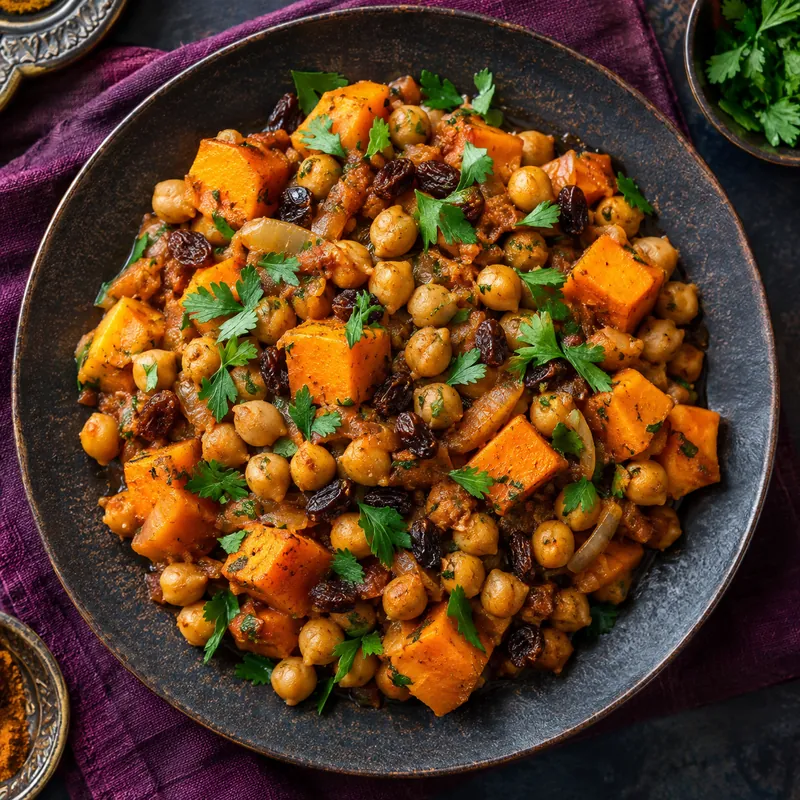
Moroccan Chickpeas with Sweet Potato
Sweet potato and dried apricots soften in a lightly spiced chickpea stew. Lemon is added after the vegetables are tender.
Ingredients
- 320 g (11.3 oz) cooked chickpeas without salt, drained
- 300 g (10.6 oz) sweet potato, peeled, cut into 1/2-inch cubes
- 100 g (3.5 oz) carrot, cut into 1/4-inch pieces
- 80 g (2.8 oz) onion, finely chopped
- 200 g (7.1 oz) no-salt-added canned tomatoes with juice, chopped
- 30 g (1.1 oz) dried apricots, finely chopped
- 2 tsp olive oil
- 1/2 tsp ground cumin
- 1/4 tsp ground ginger
- 1/4 tsp ground cinnamon
- 25 g (0.9 oz) lemon juice
- 8 g (0.3 oz) fresh parsley, chopped
- 1/8 tsp table salt
- 250 ml water
Method
- Put the sweet potato, carrot and onion in the bowl. Add cooked chickpeas, tomatoes, apricots, oil, spices and water. Stir and cover.
- Cook on LOW, checking from 5 hours, until the sweet potato and carrot yield easily to a fork.
- Stir in salt, lemon and parsley. Divide the chickpeas, vegetables, apricots and liquid equally.
Storage: Refrigerate promptly in shallow covered containers; use within 3 days. Reheat to 165°F / 74°C.
Estimated nutrition per serving
- Calories
- 528
- Protein
- 19 g
- Fiber
- 22.2 g
- Sodium
- 295 mg
- Carbs
- 97.2 g
- Fat
- 9.4 g
- Sat. fat
- 1.2 g
Why does sodium matter more once blood pressure rises after menopause?
Estrogen supports the kidneys in excreting excess sodium efficiently. When estrogen falls at menopause, this renal protection disappears and the body becomes more salt-sensitive, meaning the same sodium intake that was unremarkable at 45 can have a larger blood-pressure effect at 65. Both recipes in this article stay under 500 mg of sodium per serving by using no-salt-added canned tomatoes and water in place of broth. A standard slow cooker recipe using one stock cube, regular canned tomatoes, and regular canned beans can reach 1,000 to 1,500 mg of sodium per serving before any salt is added at the table. The three largest contributors are the stock cube (800 to 1,000 mg per cube), standard canned tomatoes (200 to 400 mg per cup), and regular canned beans (300 to 400 mg per cup). The most effective single swap is replacing the stock cube with water and switching to no-salt-added canned products. For the full sodium breakdown and postmenopausal hormonal mechanism, low sodium slow cooker recipes for seniors covers every major source. To track how your grocery choices affect daily sodium totals, the receipts tool can help identify the highest-sodium items in your basket.
How do you build a week of Mediterranean slow cooker meals without buying too much?
Start with two dinners, not seven. Both recipes in this article make two servings: one for tonight, one refrigerated for the next day. Carrots appear in both dishes, so one bag carries across the full week without waste. The chicken recipe uses a can of no-salt-added tomatoes; the chickpea stew uses sweet potato and the same canned tomatoes. With olive oil, dried oregano, ground cumin, and garlic already in a pantry, the weekly shopping reduces to one bag of carrots, one sweet potato, two chicken thighs, and one tin of cooked chickpeas without salt. A second use for leftover chickpeas: mash the remaining portion onto whole-grain toast with a drizzle of olive oil at breakfast, adding protein and fiber to the morning meal without another recipe. For the sizing and freezing logic when cooking for one person, slow cooker recipes for one or two people covers what changes when you halve a recipe and how to freeze the second portion safely.
Is a mini slow cooker good enough for a full Mediterranean dinner?
A mini slow cooker - usually 1 to 1.5 quarts - is exactly the right size for the Mediterranean dinners in this article. Both recipes use either a 1.5-quart or 2-quart bowl; neither requires the large 4-to-6-quart models that dominate most recipe sites. The concern with a smaller bowl is that the food-to-bowl ratio must still reach the halfway mark, or the food dries at the edges before it is fully cooked. For a two-person dish, a 1.5-quart cooker works well as long as the recipe was designed for that size. A recipe intended for four people, halved, in the same 1.5-quart bowl may not fill it high enough to cook correctly. This is why recipes calibrated to small bowls produce better results than adapting large-batch recipes downward. If the cooker has a WARM setting, check the appliance instructions before using it to hold cooked food - WARM is not a cooking setting, and food held in it should remain at 140 F (60 C) or above, measured with a food thermometer.
My Perspective
I avoided anything labelled Mediterranean for a long time because it felt like a restaurant concept - something that required a well-stocked pantry, a particular kind of afternoon, and probably a trip to a specialty shop. What changed it was noticing that the eating pattern I was already trying to build, more beans, more fish, less cured meat, more olive oil and lemon, already had a name and 22 qualifying studies behind it. The slow cooker version makes it realistic on a weeknight. Set it before lunch. Come back to a kitchen that smells of cumin and tomatoes. The hard part is already done. If you are not sure where your own habits sit relative to this pattern, the free 60-second quiz is a low-effort starting point. And if you want the full hormonal picture of why these choices matter in the second half of life, Estrogen Left the Chat: Biohacking Menopause goes through the mechanisms in detail.
A note from Marilyn: This article is for educational purposes and does not replace medical advice. I am a nutrition specialist, not a physician. If you have kidney disease, are managing hypertension with medication, or have specific concerns about protein intake, please discuss your individual numbers with your care team. The nutrition figures for each recipe are estimates based on measured ingredients and standard food composition data.