Why does fish overcook in a slow cooker?
A slow cooker is built for tough, collagen-rich food that needs hours of gentle heat. Fish is the opposite. Its muscle fibers are short and its connective tissue is thin, so it cooks through in minutes rather than hours, and every extra minute past done pushes out moisture. Put a cod fillet in with the vegetables at breakfast and by dinner it has been simmering for 6 hours or more: dry, chalky and broken into shreds you cannot lift out with a spoon. That is why so many people decide that fish and slow cookers do not mix. The problem is not the appliance, it is the order. The recipes in my cookbook cook in two stages for exactly this reason: the base gets the long, slow part, and the fish gets only the short finish it actually needs. Once you cook fish this way, the slow cooker becomes one of the gentlest ways to prepare it, because moist, contained heat is forgiving.
When should you add fish to a slow cooker?
Add fish at the very end, once the base is already hot. The pattern is the same in every fish recipe in the book. First, the vegetables, beans or potatoes cook on LOW for about 4 to 5 hours, until they are tender. Next, switch the cooker to HIGH and wait until the liquid is steaming, because cold fish dropped into a lukewarm base cooks unevenly. Then nestle in the fully thawed fish, cover, and start checking after 20 minutes. Most cod pieces are done in 20 to 30 minutes; shrimp is often ready in 15 to 25. Appearance alone cannot tell you the fish is safe, so use an instant-read thermometer in the thickest piece and stop at 145°F (63°C), the safe minimum temperature for fish listed on FoodSafety.gov. If you will be out during the day, set a reminder for the finishing stage before you leave, and read the last steps of the recipe before you start.
Which fish work best in a slow cooker?
Firm fish that holds its shape in liquid works best. Cod is the easiest place to start: mild, affordable, widely sold frozen, and sturdy enough to poach in a tomato base without dissolving. Salmon works well in chowders, and shrimp is excellent in bean and tomato stews because it tells you when it is done by turning pink and opaque. Canned tuna can be stirred in at the end, since it only needs to heat through. Cut fillets into pieces about an inch across so they cook at the same pace, and keep them large enough to lift out whole. Thin, delicate fillets are the hardest to get right because they overcook fastest. Mercury is a fair question for anyone eating more fish, and the good news is that the everyday slow cooker choices are the safe ones: cod, salmon, shrimp and canned light tuna all sit on the "Best Choices" list in the FDA's advice about eating fish, which ranks fish by mercury level.
How much fish do one or two people need?
The fish recipes in my cookbook use 300 grams (10.6 ounces) of cod for two servings, so about 150 grams of raw fish per person, served with beans or vegetables so the plate is filling. That portion does a lot of work. In the tomato-poached cod below, one serving delivers 42.8 grams of protein with 14 grams of fiber and 292 milligrams of sodium. Protein matters more with age, not less: the PROT-AGE Study Group recommends that adults over 65 eat at least 1.0 to 1.2 grams of protein per kilogram of body weight every day to hold on to muscle and function (Journal of the American Medical Directors Association, 2013). For a woman who weighs 70 kilograms, that is 70 to 84 grams a day, so a fish dinner can cover half of it. Cooking for one? Make the full recipe, eat one portion, and refrigerate the second in a shallow covered container for the next day. Our guide to protein and muscle in menopause explains why this matters so much after 50.
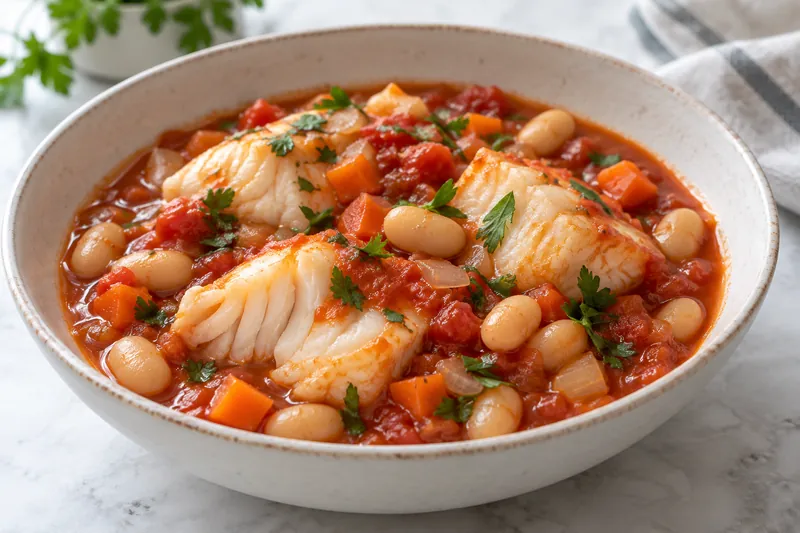
Tomato-Poached Cod with White Beans
The cod cooks in a hot tomato-and-bean base during the final stage. Keep the pieces large enough to lift out without breaking them.
Ingredients
- 300 g (10.6 oz) boneless Atlantic cod, fully thawed, cut into 1-inch pieces
- 280 g (9.9 oz) cooked white beans without salt, drained
- 300 g (10.6 oz) no-salt-added canned tomatoes with juice, chopped
- 80 g (2.8 oz) onion, finely chopped
- 100 g (3.5 oz) carrot, cut into 1/4-inch pieces
- 6 g (0.2 oz) garlic, minced
- 2 tsp olive oil
- 8 g (0.3 oz) fresh parsley, chopped
- 20 g (0.7 oz) lemon juice
- 150 ml water (about 3/4 U.S. cups)
- 1/8 tsp table salt
Method
- Combine beans, tomatoes, onion, carrot, garlic, oil and water in the bowl. Cover and cook on LOW until the carrot is tender, checking from 4 hours.
- Switch to HIGH and wait until the base is steaming hot. Nestle in the thawed cod, cover and start checking after 20 minutes. Continue until the thickest fish pieces reach 145°F / 63°C.
- Stir in the measured salt. Fold in lemon and parsley gently. Divide the cod, beans and sauce equally.
- Contains: fish. Check packaged ingredients for additional allergens.
Storage: Refrigerate promptly in shallow covered containers; use within 2 days for this recipe. Reheat gently to 165°F / 74°C.
Estimated nutrition per serving
- Calories
- 426
- Protein
- 42.8 g
- Fiber
- 14 g
- Sodium
- 292 mg
- Carbs
- 50.8 g
- Fat
- 6.6 g
- Sat. fat
- 1 g
Why is fish worth eating more often after menopause?
After menopause, the protection estrogen gave the heart fades, and cholesterol and blood pressure tend to rise, which is why heart disease becomes the leading health risk for women in this stage of life; our article on the diet pattern that protects your heart in menopause covers the full picture. Fish is one of the simplest parts of that pattern to act on. The American Heart Association's 2018 science advisory concluded that 1 to 2 seafood meals a week should be included to reduce the risk of congestive heart failure, coronary heart disease and ischemic stroke (Circulation, 2018). A 2020 meta-analysis of 40 prospective cohort studies found that people who ate the most fish had a 9% lower risk of developing coronary heart disease than those who ate the least, based on 22 studies with 918,783 participants (Nutrients, 2020). That is a modest effect, and it comes from eating fish as food. If you are weighing capsules instead, read our guide to omega-3 fish oil for menopause first.
Can eating fish help memory and mood after 50?
The honest answer is that the evidence is mixed, and anyone promising a sharper memory from salmon is getting ahead of the research. In the Doetinchem Cohort Study, which followed 2,612 men and women aged 43 to 70 for 5 years, eating more fish showed no consistent link with slower cognitive decline, although a higher intake of omega-3 fats, especially the plant form ALA, was linked with slower decline in memory (European Journal of Nutrition, 2018). Mood looks more promising but is less certain. In a national survey of 4,150 postmenopausal women in Korea, those with the highest dietary omega-3 intake were about half as likely to report depression as those with the lowest, with an odds ratio of 0.52 (Nutrition Research and Practice, 2021). That was a one-time snapshot, so it cannot show that fish caused the difference. For more on what does and does not protect the brain, see our guide to memory loss in menopause.
How do you keep a slow cooker fish dish low in sodium?
Many fish stew recipes lean on salty shortcuts: chorizo, clam juice, bouillon cubes and canned soup can each add hundreds of milligrams of sodium before you have tasted anything. The fish recipes in my cookbook build flavor differently. They start with no-salt-added canned tomatoes and cooked beans prepared without salt, lean on garlic, fennel, dill, parsley and lemon, and add a measured 1/8 teaspoon of salt only at the end, when you can taste what the dish actually needs. The result is 292 milligrams of sodium per serving for the cod with white beans and 321 milligrams for the lemony fish soup below. Sodium is worth watching after menopause because blood pressure often climbs during this transition, as our article on why blood pressure rises in perimenopause explains. Lemon juice stirred in at the finish is the single most useful trick: acid makes a low-salt dish taste brighter and fuller.
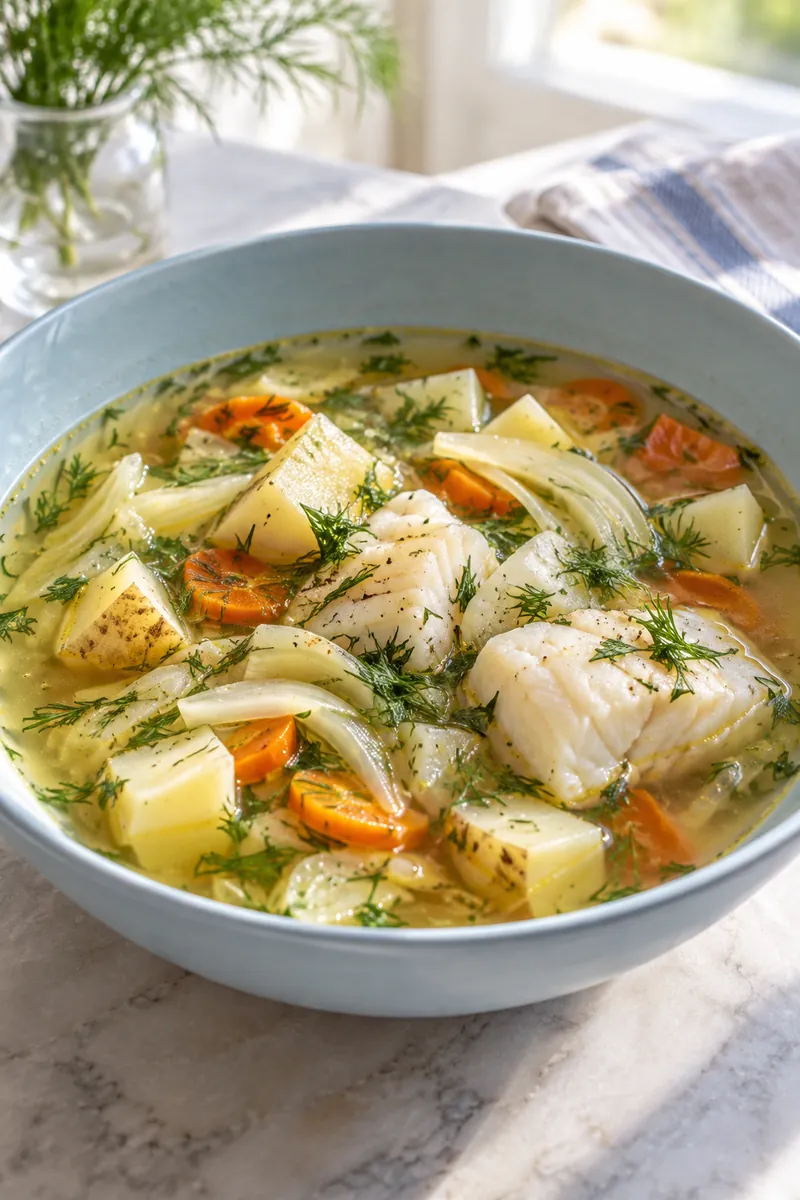
Lemony Fish and Vegetable Soup
Potato and fennel cook before the cod is added. Stir gently once the fish is in the bowl.
Ingredients
- 300 g (10.6 oz) boneless Atlantic cod, fully thawed, cut into 1-inch pieces
- 220 g (7.8 oz) potato, skin on, cut into 1/2-inch pieces
- 150 g (5.3 oz) fennel bulb, trimmed and thinly sliced
- 100 g (3.5 oz) carrot, cut into 1/4-inch pieces
- 70 g (2.5 oz) onion, finely chopped
- 6 g (0.2 oz) garlic, minced
- 2 tsp olive oil
- 30 g (1.1 oz) lemon juice
- 8 g (0.3 oz) fresh dill, chopped
- 500 ml water (about 2 U.S. cups)
- 1/8 tsp table salt
Method
- Combine potato, fennel, carrot, onion, garlic, oil and water in the bowl. Cover and cook on LOW until vegetables are tender, checking from 4 hours.
- Switch to HIGH and let the base become steaming hot. Add cod, cover and check after 20 minutes. Continue until the thickest pieces reach 145°F / 63°C.
- Stir in the measured salt. Stir in lemon and dill without breaking all the fish apart. Divide the fish, vegetables and broth equally.
- Contains: fish. Check packaged ingredients for additional allergens.
Storage: Refrigerate promptly in shallow covered containers; use within 2 days for this recipe. Reheat gently to 165°F / 74°C.
Estimated nutrition per serving
- Calories
- 315
- Protein
- 31.1 g
- Fiber
- 6.8 g
- Sodium
- 321 mg
- Carbs
- 35.1 g
- Fat
- 6 g
- Sat. fat
- 1 g
My Perspective
I avoided fish in the slow cooker for years because the first time I tried it, I followed a recipe that had me put everything in at once, and what came out was closer to fish-flavored oatmeal. What finally fixed it was not a better recipe but a better schedule. The base does the slow work; the fish shows up for the last half hour, like a guest who knows the party is already warm. Once I started cooking this way, fish went from a special-occasion dinner to something I make on ordinary Tuesdays, and for one or two people that is exactly the point. That is why every fish recipe in my new book, The Mediterranean Slow Cooker Cookbook for Seniors, is written in two stages, with the finishing time spelled out. The bigger story of how menopause changes your heart, muscle and metabolism is in Estrogen Left the Chat: Biohacking Menopause. And if you have ever wondered whether low-and-slow cooking is healthier in general, I dug into that in does slow cooking make food healthier.
Not sure which of your symptoms are hormonal? The free Receipts symptom decoder helps you track your own pattern, or start with the 60-second quiz.
A note from Marilyn: This article is educational and does not replace medical advice. If you take blood thinners, follow a sodium or protein limit for kidney or heart disease, or have a fish allergy, talk with your doctor or a registered dietitian first. I am a nutrition specialist, not a physician.
Frequently asked questions
Can you put frozen fish in a slow cooker?
Slow cooker fish recipes work best with fish that is fully thawed, ideally overnight in the refrigerator. Frozen pieces cool the hot base, so the outside can overcook while the center is still cold, and the dish takes longer to come back up to a safe temperature. Thaw the fish first, add it to a steaming base on HIGH, and check that the thickest piece reaches 145°F (63°C).
How long does fish take to cook in a slow cooker?
Fish takes about 20 to 30 minutes in a slow cooker, added at the end rather than the start. Cook the vegetable or bean base on LOW for about 4 to 5 hours, switch to HIGH until the liquid is steaming, then nestle in the thawed fish. Start checking after 20 minutes and stop when the thickest piece reads 145°F (63°C). Shrimp is usually ready a little sooner, in about 15 to 25 minutes.
What is the best fish for slow cooker recipes?
Firm fish that holds together in liquid is the best choice for slow cooker recipes: cod, salmon and other thick fillets, plus shrimp. Cut fish into pieces about an inch across so they cook evenly and can be lifted out whole. Thin, delicate fillets overcook fastest. Cod, salmon, shrimp and canned light tuna are also on the FDA's list of best choices for low mercury.
How often should women over 50 eat fish?
One to two seafood meals a week is the amount the American Heart Association's 2018 science advisory recommends to lower the risk of congestive heart failure, coronary heart disease and ischemic stroke. For women over 50, a slow cooker makes that easier: one pot of fish stew or soup sized for two covers a dinner and a second portion for the next day.